


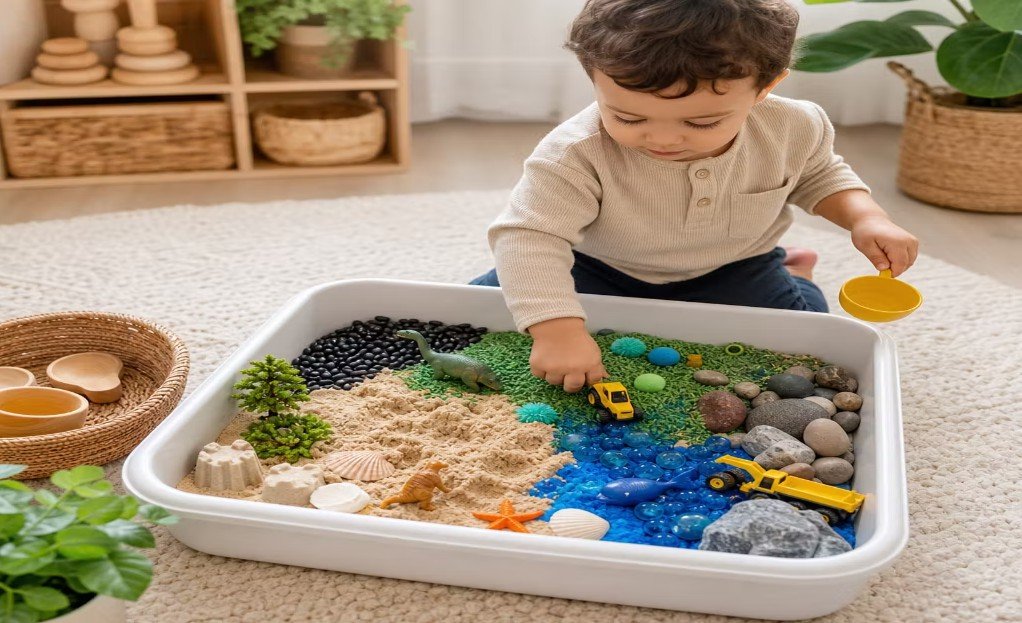
Toddlers learn best when they can touch, explore, scoop, pour, and get a little messy! Sensory bins are a simple and fun way to encourage hands-on learning while helping toddlers develop important fine motor skills.
Fine motor skills involve the small muscles in the hands and fingers. These skills help children with everyday activities such as holding crayons, using spoons, buttoning clothes, turning pages, and eventually writing.
The best part? You don't need expensive toys or complicated setups. With a few household items and some creativity, you can create engaging sensory activities right at home.
Here are 5 easy sensory bin ideas for toddlers that encourage fine motor development through playful exploration.

A rice sensory bin is a classic activity that gives toddlers plenty of opportunities to scoop, pour, grasp, and transfer objects.
Fill the bin with dry rice and add a few larger toys or objects for your toddler to discover. Provide different-sized cups, spoons, and scoops.
Encourage your child to scoop the rice into a cup, pour it into another container, or use their hands to find the hidden objects.
You can also introduce simple color or counting games by adding colorful objects to the bin.
This activity encourages:
Try giving your toddler a simple challenge such as, "Can you fill this cup?" or "Can you find the red toy?"
These little prompts encourage children to use their hands with greater control while also developing early language and cognitive skills.
Pom-poms make a colorful and engaging sensory bin activity. They are lightweight and easy for little hands to pick up, move, and sort.
Place the pom-poms inside a bin and arrange a few empty bowls nearby.
Invite your toddler to pick up the pom-poms and place them into the bowls. You can encourage them to sort the pom-poms by color.
For example:
"Put the blue pom-poms in the blue cup."
As your child becomes more comfortable, introduce tongs for an additional fine motor challenge.
This activity helps develop:
Using tongs can be especially useful because your toddler needs to squeeze and release them while carefully moving each pom-pom.
Keep instructions simple. Toddlers don't need a complicated lesson plan. Give them time to explore the materials freely before introducing sorting or other challenges.
Safety note: Use large pom-poms and supervise your toddler closely, as small objects can be choking hazards.
Water play is an easy, inexpensive sensory activity that toddlers often love. It also provides excellent opportunities to practice pouring and transferring.
Fill the container with a small amount of water and place it on a washable surface.
Give your toddler cups, spoons, and small containers to experiment with.
They can scoop water with a spoon, fill a cup, pour water into another container, or move floating toys around the bin.
Water play can support:
It also introduces toddlers to simple concepts such as full and empty, more and less, and floating and sinking.
Ask simple questions while your child plays:
"Is the cup full or empty?"
"Can you pour the water into the big cup?"
"Which toy is floating?"
This turns a simple sensory activity into an opportunity for language, problem-solving, and early science learning.
Toddlers love discovering hidden objects. A simple "dig for animals" bin turns sensory play into a little adventure while encouraging children to use their fingers and hands.
Hide several large toy animals in the sensory material.
Invite your toddler to dig through the bin to find them. Once they find an animal, encourage them to place it in a cup or group similar animals together.
You can make the activity as simple or challenging as your toddler's abilities allow.
Your toddler can practice:
Sensory bins are also great for talking and storytelling.
Ask:
"Which animal did you find?"
"What sound does the cow make?"
"Can you find another animal?"
"What color is the elephant?"
Your toddler is developing multiple skills while simply playing and exploring.
Dry pasta is another simple material that can provide lots of opportunities for fine motor practice.
Place the dry pasta into a shallow container. Add a few cups and spoons.
Let your toddler transfer the pasta from one container to another using their hands or a spoon.
Older toddlers may enjoy using tongs to pick up individual pieces.
This activity encourages:
You can also introduce simple counting by asking your toddler to place a few pieces of pasta into a cup.
There doesn't need to be a "right" way to play.
Your toddler might scoop the pasta, pour it, move it between containers, or simply explore its texture. Allowing children to experiment freely helps build confidence and encourages independent learning.
Sensory bins aren't just entertaining—they provide repeated opportunities for toddlers to practice small hand movements.
When children scoop rice, pick up pom-poms, pour water, dig through sand, or transfer pasta, they are strengthening the muscles and coordination they will later use for everyday tasks.
These activities can help prepare toddlers for skills such as:
Sensory play can also support concentration, problem-solving, language development, and creativity.
You don't need to fill the bin with lots of materials. One sensory material and a few tools are often enough.
If your child loves animals, create an animal-themed bin. If they enjoy colors, add a sorting activity. Following their interests can make sensory play more engaging.
Sensory play doesn't always need instructions. Give your toddler time to touch and explore the materials before introducing a specific activity.
If your toddler is new to sensory play, begin with a small amount of material and a shallow container. You can gradually introduce new textures and tools.
Toddlers often explore with their mouths, so choose materials carefully and supervise sensory play at all times. Avoid small objects and materials that could pose a choking risk.
Sensory bins are an easy way to turn everyday materials into meaningful learning experiences. From scooping colorful rice to digging for toy animals, each activity gives toddlers opportunities to strengthen their little hands while exploring the world around them.
You don't need a perfect setup or expensive supplies. A simple container, safe materials, and a little imagination can provide hours of hands-on learning.
Most importantly, enjoy the process with your child. Talk, explore, laugh, and let them get curious. Those simple moments of play can support important developmental skills that grow with them.
